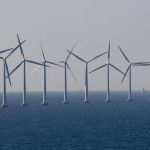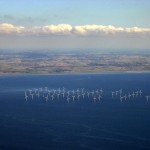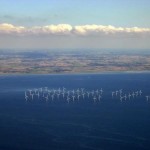

New research reveals that wind farms can provide seals and other marine mammals with valuable feeding opportunities.

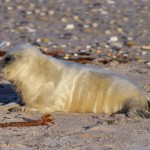
Dr. Deborah Russell, a post-doctoral research fellow at the Scottish Oceans Institute at the University of St Andrews, tracked harbor and grey seals in the North Sea and found that some seals appear to deliberately seek out and forage around offshore wind turbines.
“I was shocked when I first saw the stunning grid pattern of a seal track around Sheringham Shoal,” an offshore wind farm in Norfolk, Dr. Russell said.
“You could see that the seal appeared to travel in straight lines between turbines, as if he was checking them out for potential prey and then stopping to forage at certain ones.”
Marine mammals have been observed in swimming around man-made structures before, but this is the first time that a study has documented the animals having a direct “affinity with the structures themselves,” Dr. Russell explained.
These findings could have implications for future offshore wind farm development, and for the decommissioning of oil and gas rigs. For example, development of new man-made structures could be designed to maximize any possible benefits to marine life.
However, Dr. Russell notes that “the study only considered the effect on marine mammals during the operational stage of wind farms.” Therefore, the findings should not rule out the possibility of “adverse impacts of the development or presence of man-made structures on marine wildlife.”
To learn more:
- Read the full news release: Putting the wind in their seals.
Copyright © 2014 by Marine Science Today, a publication of Marine Science Today LLC.